

Which Is Better for Santa Barbara Homes, Vinyl or Fiberglass Windows?
In the vinyl vs fiberglass windows decision for Santa Barbara homes, vinyl is usually the budget-friendly choice for stucco and ranch homes with standard openings, while fiberglass suits homes that want slimmer frames, paintable or darker colors, large openings, or strong sun and salt-air exposure. Both can meet California energy code.
Bella View Windows & Doors has installed vinyl and fiberglass windows for homeowners across the Santa Barbara South Coast since 1982, from Goleta tract homes to Montecito estates, Carpinteria beach cottages, and Santa Ynez Valley ranch houses. As a Milgard Certified dealer holding CSLB License #1121282, our Santa Barbara window installers help homeowners compare these two materials at almost every consultation. This guide lays out how vinyl and fiberglass differ on cost, appearance, durability, energy performance, and code, so you can match the material to your house. Our window and door replacement services page lists the full range of materials and installation options.
Request a free in-home window consultation to see vinyl and fiberglass options side by side for your home.
What Is the Difference Between Vinyl and Fiberglass Windows?
Vinyl windows have frames made of PVC, a rigid plastic, with hollow chambers inside for strength and insulation. Fiberglass windows have frames made of glass fibers bonded with resin, which creates a stiffer material that expands and contracts at a rate close to glass. That difference shapes frame size, color options, and price.
Both materials are low-maintenance compared with wood, neither rusts, and both are used in dual-pane low-E replacement windows made for retrofit and full-frame installation. The differences show up in the details:
- Stiffness. Fiberglass is stiffer than vinyl, so fiberglass frames can be narrower for the same size window.
- Movement with temperature. Vinyl expands and contracts more with heat and cold than fiberglass does.
- Color and finish. Fiberglass frames can be painted. Vinyl color is built into the material or applied as a factory finish, and most vinyl frames are not meant to be repainted.
- Price. Vinyl is typically the more budget-friendly material.
Which Costs More, Vinyl or Fiberglass Windows?
Fiberglass windows typically cost more than vinyl windows of the same size and style. Vinyl is often the most budget-friendly frame material for replacement windows, while fiberglass sits at a higher price point because of the material and the manufacturing process. Product line, color, glass, and installation method also change the price.
The gap between the two materials can narrow or widen depending on choices within each line. A premium vinyl series with a dark exterior color and upgraded glass can approach the price of an entry fiberglass window, while large fiberglass picture windows and custom shapes add more. Installation method affects both equally, since full-frame installation adds labor and stucco finishing compared with retrofit installation.
Our guide to how much it costs to replace windows in Santa Barbara covers every factor that shapes a window quote.
Which Holds Up Better in Santa Barbara’s Sun and Salt Air?
Both vinyl and fiberglass resist salt-air corrosion because neither frame material rusts. Fiberglass handles heat cycles and strong sun with less movement, which can reduce stress on corners and seals over time. On either material, metal hardware near the beach needs regular rinsing and lubrication to keep operating smoothly.
On the South Coast, south- and west-facing windows take the most punishment from afternoon sun, while ocean-facing walls in Carpinteria, Goleta, and along the Santa Barbara waterfront take salt spray and wind-driven rain. Many homeowners choose fiberglass for the most exposed walls of a house and vinyl for sheltered sides.
Our guide to the best windows for coastal homes in Santa Barbara goes deeper on salt air, hardware, and frame finishes near the ocean.
Do Vinyl Windows Expand More Than Fiberglass in the Heat?
Yes. Vinyl expands and contracts more than fiberglass as temperatures change, while fiberglass moves at a rate close to the glass it holds. Manufacturers design vinyl windows to account for that movement, and vinyl performs well in mild climates like the Santa Barbara coast. Large windows and dark colors in full sun are where the difference shows most.
Every day, glass and frames warm up in the afternoon and cool down at night. When the frame and the glass move at different rates, the seal at the edge of the glass and the frame corners take more stress. Fiberglass reduces that mismatch. Vinyl windows use reinforced corners, chambered frames, and sizing limits to manage it.
Color plays a part. Dark exterior colors absorb more heat than white or light tones, so manufacturers limit dark colors on some vinyl lines or use specially formulated exterior finishes for them. Inland homes in the Santa Ynez Valley, where summer afternoons run hotter than on the coast, are where frame movement and color choice deserve the closest look.
Which Looks Better, Vinyl or Fiberglass Windows?
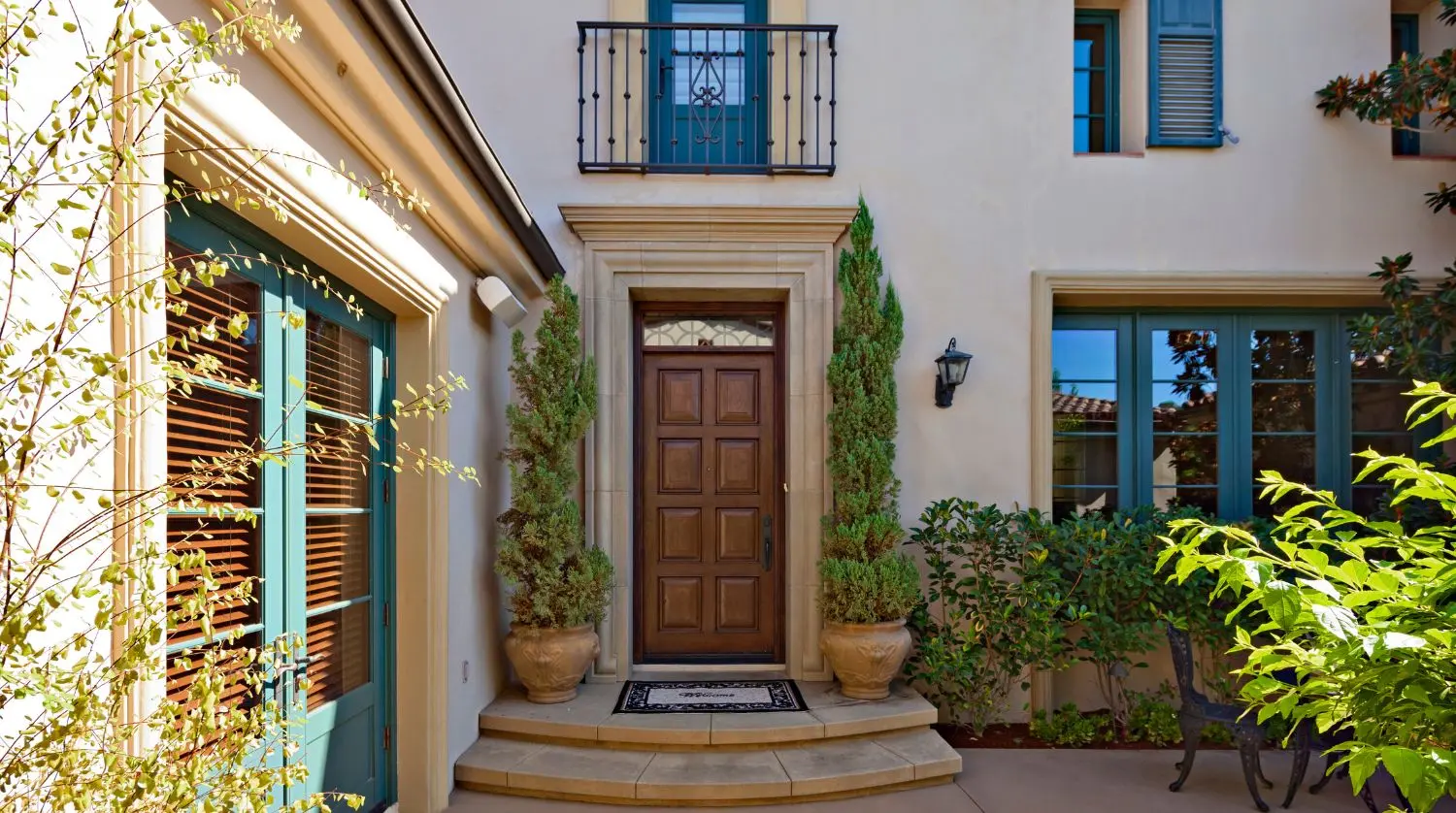
Fiberglass windows usually have narrower frames, sharper lines, and more color choices, including painting, which many homeowners prefer for modern, Craftsman, and Spanish-style homes. Vinyl windows have wider frames on many product lines and a smaller color range, but they look clean on stucco ranch homes and come in a wide range of styles.
Appearance points to compare in the showroom or during a consultation:
- Sightlines. Sightlines are the visible width of frame around the glass. Narrower sightlines mean more glass and a lighter look.
- Exterior colors. Both materials offer white and neutral tones. Fiberglass frames can typically be painted, and darker exterior colors are available on many lines of both materials.
- Interior finish. Some fiberglass and vinyl lines offer interior colors or wood-look finishes that differ from the exterior.
- Grids. Grids, also called muntins or divided lites, can sit between the panes or be applied to the glass surface to suggest traditional divided windows.
Are Vinyl or Fiberglass Windows More Energy Efficient?
Vinyl and fiberglass windows can both deliver strong energy performance, and the glass package affects efficiency more than the frame material. Compare windows by the NFRC label: a lower U-factor means less heat escapes, and a lower Solar Heat Gain Coefficient (SHGC) means less solar heat comes through. Both materials can meet Title 24.
The National Fenestration Rating Council (NFRC) is the independent nonprofit that certifies window energy ratings, and its label lets you compare products across materials. U-factor measures how quickly heat passes through the whole window. SHGC measures how much of the sun’s heat passes through the glass. Low-E coatings, which are microscopically thin metal oxide layers that reflect heat, and argon gas fill between the panes drive most of those numbers.
- California Energy Code, Title 24 Part 6. The 2025 Building Energy Efficiency Standards apply to permit applications filed on or after January 1, 2026. For single-family homes, replacement windows generally must meet a maximum U-factor of 0.27, with SHGC limits that depend on the climate zone and limited exceptions.
- Permits. In the City of Santa Barbara, all window replacements require a building permit, and the NFRC label is how energy compliance is documented. The City of Goleta, the City of Carpinteria, and the County of Santa Barbara each run their own permit process.
Which Is Better for Historic and Spanish-Style Santa Barbara Homes?
For historic and Spanish-style Santa Barbara homes, fiberglass and wood clad windows are often easier to match to the original architecture because of their slimmer frames, deeper profiles, paintable surfaces, and divided-lite options. Vinyl can work on some older homes, but design review may focus on how closely the window matches the original.
Homes in City of Santa Barbara historic districts or listed as historic resources may need review before window changes, and buildings more than 50 years old require an evaluation by the city’s Architectural Historian. Reviewers often look at frame profile, sightlines, grid pattern, and how deeply the window sits in the wall. Our article on how the Historic Landmarks Commission reviews window changes explains the process, and our guide to historic window projects in Santa Barbara covers product choices for older homes.
For homes built before 1978, the EPA Renovation, Repair and Painting (RRP) rule applies to window replacement regardless of the new frame material, so lead-safe work practices are part of the project unless testing shows the components are lead-free.
Which Is Better in Wildfire Areas, Vinyl or Fiberglass?
California Building Code Chapter 7A does not require a specific frame material in mapped wildfire areas. It regulates the glass: exterior windows most commonly meet the rule with a multi-pane insulating glass unit that has at least one tempered pane. Vinyl and fiberglass windows can both be ordered with compliant glass.
Chapter 7A applies to homes in mapped Fire Hazard Severity Zones, which include many foothill and canyon areas around Santa Barbara, Montecito, and Carpinteria. CAL FIRE released updated Fire Hazard Severity Zone maps for Local Responsibility Areas in 2025, so check the current map for your address before ordering. Other compliance options under Chapter 7A include glass block, glazing with a 20-minute fire-resistance rating, or windows that pass the State Fire Marshal’s SFM 12-7A-2 performance test.
Beyond what the code requires, homeowners in fire-prone areas often ask how each frame material behaves. Manufacturer specifications and any listed fire testing for a specific product are the place to compare, and Bella View can help you find that published information for the products you are considering.
Do Vinyl or Fiberglass Windows Last Longer?
Both vinyl and fiberglass windows can last for decades with good installation and care. A National Association of Home Builders study estimated vinyl windows at about 20 to 40 years and did not list a separate estimate for fiberglass. Fiberglass’s stability in heat is a reason many homeowners choose it for exposed walls.
How long any window lasts depends heavily on installation and maintenance. Proper flashing keeps water out of the wall, regular rinsing keeps salt off hardware, and clear weep holes let water drain from the sill. Our guide to how long windows last in a coastal climate covers what shortens window life near the ocean.
Do Vinyl and Fiberglass Window Warranties Differ?
Warranty terms vary by manufacturer and product line, not just by frame material, so compare the published warranty for each specific series. Check how each warranty covers the frame, glass seal, hardware, and finish, whether coverage includes labor, and how it treats later owners and homes near salt water.
Milgard’s Full Lifetime Warranty is one example of how coastal terms can apply. For eligible Milgard products, it excludes loss of hardware functionality in highly corrosive environments, which it defines to include any home within two miles of salt water, while covering stainless steel hardware in those environments for one year from the warranty start date. Warranty terms change over time, and the manufacturer’s published warranty for the specific product governs.
Should You Choose Vinyl or Fiberglass for Your Santa Barbara Home?
Choose vinyl when budget is a priority, the openings are standard sizes, and the house suits a clean, simple frame. Choose fiberglass when you want slimmer frames, paintable or darker colors, large windows, or extra stability on walls facing strong sun and salt air. Many homes use both.
Vinyl is often a strong fit for:
- Stucco ranch and tract homes in Goleta, Santa Barbara, and Carpinteria.
- Replacing older aluminum sliders with dual-pane low-E windows on a budget.
- Bedrooms, bathrooms, and sheltered walls with moderate sun.
- Rental properties and whole-house projects where cost per opening is the priority.
Fiberglass is often a strong fit for:
- Ocean-facing walls and beach-adjacent homes with heavy salt-air exposure.
- West- and south-facing windows that take strong afternoon sun.
- Large picture windows and wide window groupings where narrow frames maximize glass.
- Modern, Craftsman, and Spanish-style homes that call for darker or painted frames.
- Homes where design review or neighborhood character calls for slimmer profiles.
Can You Mix Vinyl and Fiberglass Windows in the Same House?
Yes. Mixing vinyl and fiberglass windows in one house is common and can stretch a budget, with fiberglass on the street-facing or most exposed walls and vinyl on sheltered sides. Choosing colors and grid patterns that coordinate between the two lines keeps the house looking consistent.
Frame widths and profiles differ between materials, so it often works well to keep each elevation, or each side of the house, in one material. That way the difference is never visible in the same view. Our Santa Barbara replacement window team can lay out options side by side during the consultation.
How Do Our Santa Barbara Window Installers Help You Choose Between Vinyl and Fiberglass?
Our Santa Barbara window installers walk each side of the house, note sun, salt air, and storm exposure, and look at the architecture before recommending vinyl, fiberglass, or a mix. From there, the project moves through measurement, selection, permits, ordering, installation, testing, cleanup, and a walkthrough.
- Free in-home consultation and measurement. Every opening is measured with a dual-check process, exposure is noted, and pricing for each material option is provided on the spot.
- Product and glass selection. Options include vinyl and fiberglass windows from manufacturers such as Milgard, Anlin, and Windsor, along with aluminum and wood clad windows when a home calls for them.
- Permits and reviews. Permits are pulled with the right city or county, and any HOA architectural committee or historic review is planned before ordering.
- Ordering and lead time. Materials typically arrive in four to six weeks.
- Installation day. In-house installers re-measure each opening on install day, then install, flash, and seal each window. Most installs are finished in one day.
- Testing, cleanup, and walkthrough. Every unit is tested, the site is cleaned, and the homeowner gets a walkthrough of operation and care.
- Warranty follow-up. If a question comes up later, our Goleta and Santa Barbara window replacement crew helps connect the homeowner with the manufacturer’s warranty process.
Why Choose Bella View Windows & Doors for Your Vinyl or Fiberglass Window Project?
Bella View Windows & Doors has served Santa Barbara, Goleta, Montecito, Carpinteria, and Santa Ynez since 1982. As a Milgard Certified dealer, Bella View holds CSLB License #1121282, uses in-house installers, and measures and flashes every opening as if it will face salt air and winter storms for decades.
The goal on every South Coast project is the right window for the house and the budget, not the most expensive one. Sometimes that is vinyl throughout, sometimes fiberglass throughout, and often a mix chosen wall by wall. Our Santa Barbara replacement window team also offers patio doors, retrofit and full-frame installation, materials-only sales, and insurance repair and restoration for fire, wind, and water damage.
Contact Our Santa Barbara Window Installers
If you are weighing vinyl vs fiberglass windows, a Santa Barbara window installer from Bella View Windows & Doors can show you both and price them for your openings. Schedule your free in-home window consultation, or visit the showroom at 3010 State Street, Santa Barbara, CA 93111, Monday through Friday from 8am to 4:30pm. CSLB License #1121282.
This article is for general information only. Building codes, energy requirements, fire hazard maps, permit rules, and pricing change over time and vary by property. Confirm current requirements with your city or county before starting a project. Manufacturer warranty terms and published specifications govern product coverage and performance.