

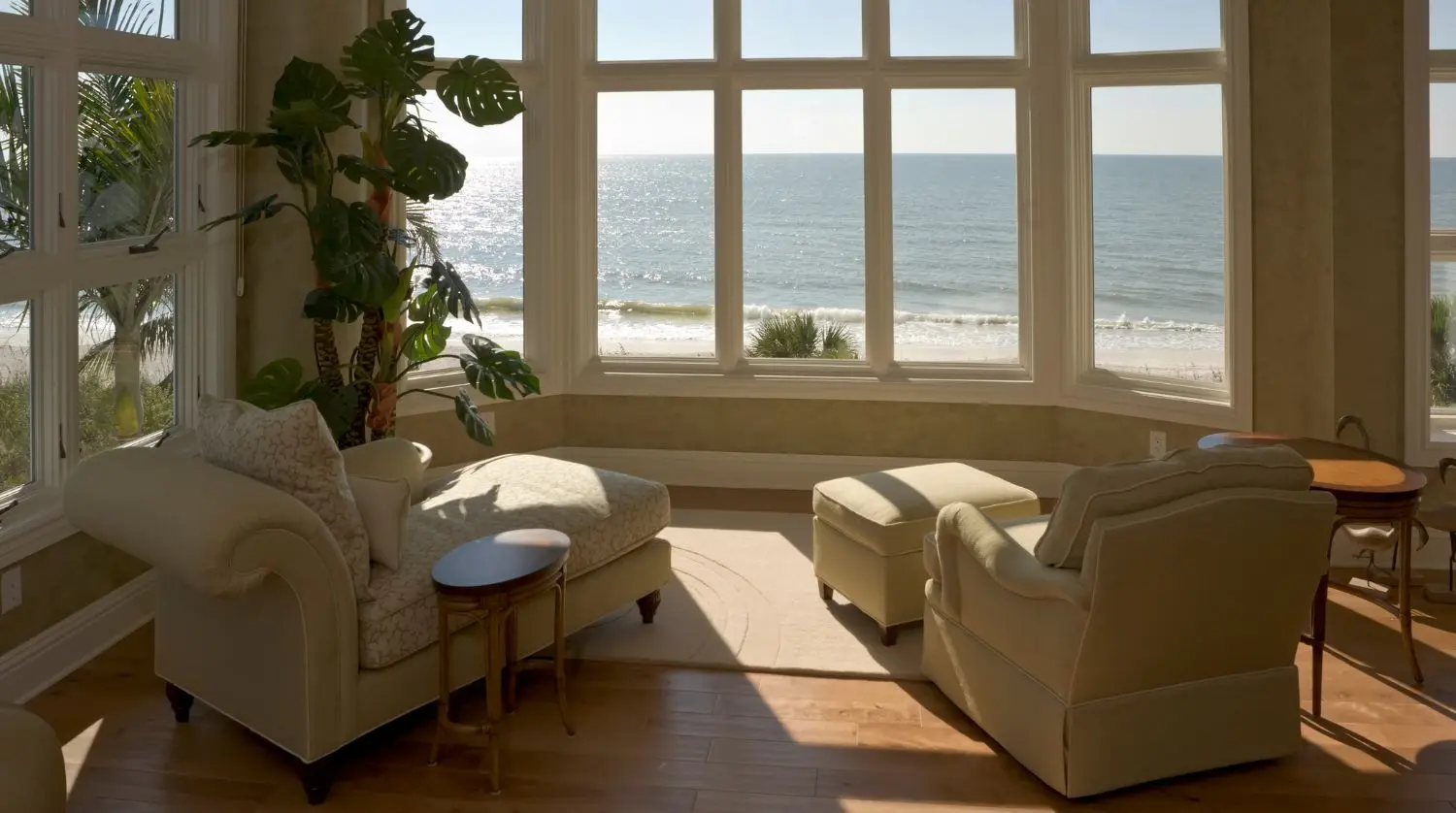
How Long Do Windows Last in a Coastal Climate?
How long windows last in a coastal climate like Santa Barbara’s depends on the frame material, the quality of the installation, and how much salt air, sun, and wind-driven rain the windows face. Industry estimates put many window types at roughly 15 to 40 years, and coastal exposure tends to shorten the life of hardware, finishes, and seals.
Bella View Windows & Doors has replaced windows for homeowners across the Santa Barbara South Coast since 1982, from beach-adjacent homes in Carpinteria and Goleta to hillside homes in Montecito and inland homes in the Santa Ynez Valley. As a Milgard Certified dealer holding CSLB License #1121282, our Santa Barbara window installers see how each frame material ages a few blocks from the ocean compared with a few miles inland. This guide covers typical window lifespans, what shortens them near the coast, and what helps windows last. Our window and door replacement services page lists the products and installation options available when it is time to replace.
Request a free in-home window consultation if you would like a Santa Barbara window replacement team to check the condition of your current windows.
How Long Do Windows Last on Average?
A National Association of Home Builders (NAHB) study of housing component life expectancy estimated that aluminum windows last about 15 to 20 years, vinyl windows about 20 to 40 years, and wood windows 30 years or more. Those are general estimates, and maintenance, installation, and climate all move the real number up or down.
The NAHB study surveyed manufacturers, trade groups, and researchers, and its authors described the results as general guidance rather than a promise of durability. Many homeowners also replace windows that still open and close because the glass is single-pane, the frames are drafty, or the style no longer suits the house.
On the South Coast, the age of a window tells only part of the story. A 25-year-old vinyl window on a sheltered side of a Santa Ynez home may still work well, while the same window on the ocean-facing wall of a Carpinteria beach house may have stiff hardware, chalky frames, and a failing seal.
How Long Do Vinyl Windows Last Near the Coast?
Vinyl windows were estimated to last about 20 to 40 years in the NAHB study. Near the coast, the vinyl frame itself does not rust, but metal hardware, rollers, and reinforcement can corrode, and strong sun can fade or chalk some colored finishes. Seal and hardware condition often decide when vinyl windows need replacing.
Vinyl is a PVC frame material that never needs painting, which makes it a common choice for South Coast stucco and ranch homes. Signs that a coastal vinyl window is aging include:
- Locks and cranks that stick, grind, or no longer catch.
- Sliding sashes that drag because rollers or tracks have worn.
- White or chalky residue on darker exterior colors after years of sun.
- Fog between the panes, which means the insulating glass seal has failed.
- Gaps where the frame corners or the joint with the stucco have opened.
How Long Do Aluminum Windows Last in Salt Air?
Aluminum windows were estimated to last about 15 to 20 years in the NAHB study, and salt air is especially hard on them. Older aluminum frames near the beach often show pitting, white powdery corrosion, and stiff or seized hardware, and many lack the thermal break that newer aluminum windows use to reduce heat transfer.
Many South Coast homes built from the 1950s through the 1980s still have their original aluminum sliders, often with single-pane glass. Those frames conduct heat and cold quickly, collect condensation on cool mornings, and corrode where salt deposits sit in tracks and corners.
Newer aluminum windows are a different product. Thermally broken aluminum separates the inner and outer metal with an insulating strip, and modern finishes are designed for exterior exposure. Aluminum still appeals to owners of modern homes who want very narrow frames and large panes of glass.
How Long Do Wood and Wood Clad Windows Last?
Wood windows were estimated to last 30 years or more in the NAHB study, and many historic Santa Barbara homes still have original wood sashes far older than that. Wood can last a long time near the coast only with regular painting, sealing, and glazing repair, because moisture that reaches bare wood leads to rot.
Wood clad windows combine a wood interior with an exterior cladding, often aluminum, that protects the wood from weather. The cladding reduces exterior painting, but the joints, sills, and interior wood still need attention. On a wood or wood clad window, the bottom rail and sill usually show trouble first, because water and condensation collect there.
Owners of older homes in City of Santa Barbara historic districts may be weighing repair against replacement. Our guide to historic window projects in Santa Barbara covers how replacement windows can fit historic architecture.
How Long Do Fiberglass Windows Last?
The NAHB study did not include a separate estimate for fiberglass windows. Fiberglass frames are designed to expand and contract at a rate close to glass, resist warping, and hold paint, which is why many coastal homeowners consider them. The manufacturer’s published warranty is the clearest written statement of coverage for a specific fiberglass product.
Because fiberglass and glass move together as temperatures change, there is less stress on the seals and corners over years of sun and cool nights. Fiberglass frames can also be painted, which helps them match homes with darker or custom colors. Like any window near the ocean, fiberglass windows still have metal hardware that benefits from regular rinsing and lubrication.
Our guide to the best windows for coastal homes in Santa Barbara compares fiberglass, vinyl, aluminum, and wood clad windows for homes near the beach.
Why Do Windows Wear Out Faster Near the Ocean?
Windows wear out faster near the ocean because salt carried in sea spray and the marine layer settles on frames, tracks, and hardware, holds moisture, and speeds corrosion. Strong sun breaks down finishes and weatherstripping, and wind-driven winter rain tests every seal and joint around the opening.
Several conditions on the Santa Barbara South Coast add up over the life of a window:
- Salt deposits. Salt crystals collect in sliding tracks, weep holes, and hardware, where they attract moisture and corrode metal.
- Marine layer moisture. Damp, gray mornings keep salt deposits wet instead of letting them dry and blow away.
- Sun exposure. South- and west-facing windows take strong sun that ages finishes, vinyl colors, and rubber weatherstripping.
- Heating and cooling cycles. Warm afternoons and cool nights expand and contract glass and frames, which stresses the edge seal on dual-pane glass.
- Wind-driven rain. Winter storms push water against windows from the side, so any gap in caulking, flashing, or the frame can let water in.
- Sand. Blowing sand near the beach wears tracks and rollers on sliding windows and doors.
How Long Do Window Seals Last?
The edge seal on dual-pane glass keeps dry air or argon gas sealed between the panes, and it can fail years before the frame wears out. When a window seal is broken, fog or haze appears between the panes and cannot be wiped away. Sun, heat cycles, and water sitting against the glass edge all shorten seal life.
An insulating glass unit is two panes of glass separated by a spacer and sealed around the edge. Seal failure is one of the most common reasons coastal homeowners call about windows that otherwise look fine. Depending on the frame’s condition, the fix may be a new glass unit, a new sash, or a full window replacement.
Our article on why there is condensation on the inside of windows explains how to tell a failed seal from ordinary condensation, and how to check whether a window is still under its manufacturer warranty.
Does a Window Warranty Tell You How Long Windows Will Last?
A window warranty describes what the manufacturer will repair or replace and under what conditions, not how long the window will last in your home. Coverage often differs for glass, frames, and hardware, and some warranties limit hardware coverage near salt water, which is important on the South Coast.
Milgard’s Full Lifetime Warranty shows how coastal terms can work. For eligible Milgard products, the warranty excludes loss of hardware functionality in highly corrosive environments, which it defines to include any home located within two miles of salt water. In those environments, Milgard covers stainless steel hardware that loses functionality for one year from the warranty start date. The warranty also excludes damage related to not following Milgard’s care and maintenance instructions.
Warranty terms vary by manufacturer, product line, purchase date, and ownership, and the manufacturer’s published warranty for the specific product governs. Before choosing windows for a home near the beach, ask how the warranty treats hardware and finishes at your address.
Does Installation Affect How Long Windows Last?
Installation has a large effect on how long windows last, because water that gets behind the frame damages the wall and the window from the inside. Proper flashing, sealing, and drainage at the sill keep wind-driven rain out, while gaps and missing flashing let water reach framing and stucco.
Two installation methods are common for replacement windows:
- Retrofit installation sets the new window inside the existing frame and leaves the surrounding stucco or siding intact. It works well when the existing frame is sound and dry.
- Full-frame installation removes the old window down to the rough opening, the framed hole in the wall, so the opening can be inspected, repaired, and reflashed. Flashing is the waterproof membrane that directs water away from the window, and a sill pan is the flashing piece that catches water at the bottom of the opening.
Full-frame installation is often the better choice for coastal openings with water damage or rot, or for windows facing the full force of winter storms. Bella View Windows & Doors also handles stucco and drywall finishing after full-frame installation.
How Can You Make Windows Last Longer Near the Coast?
To make windows last longer near the coast, rinse salt and sand off frames, tracks, and hardware with fresh water, keep weep holes clear, lubricate moving hardware, and inspect caulking each year before the rainy season. Following the manufacturer’s care instructions also keeps warranty coverage intact.
A simple coastal maintenance routine:
- Rinse frames, screens, and tracks with a gentle stream of fresh water every few weeks for homes close to the beach, and after windy stretches. Avoid high-pressure spray nozzles, which Milgard’s care instructions say not to use on glass.
- Clean glass with mild dish soap and water, rinse, and dry with a soft cloth. Skip razor blades, abrasive pads, and petroleum-based cleaners.
- Vacuum sand and debris out of sliding window and door tracks.
- Clear weep holes, the small drainage slots at the bottom of the frame, so water can drain out.
- Lubricate locks, hinges, cranks, and rollers with a product the manufacturer approves. Milgard’s care guidance has recommended lubricating hardware at least twice a year in high-salt-air areas.
- Check exterior caulking and the joint between the frame and stucco each fall, before winter storms.
- Repaint or refinish wood surfaces on schedule so moisture never reaches bare wood.
What Signs Mean Coastal Windows Are Near the End of Their Life?
Coastal windows are usually near the end of their life when several problems appear together: hardware that no longer locks, fog between the panes, corroded or rotted frames, water leaking during rain, and drafts you can feel. One problem may be repairable, while several at once usually point toward replacement.
- Corroded, pitted, or swollen frames, or soft wood at the sill.
- Fog or haze between the panes on several windows.
- Windows that are hard to open, close, or lock.
- Water stains on walls or floors below windows after storms.
- Single-pane glass, or frames with noticeable drafts.
- Heavy condensation on cold glass and metal frames most mornings.
If you are planning a replacement, our guide to how much it costs to replace windows in Santa Barbara covers the factors that shape a window replacement quote, including the City of Santa Barbara’s permit requirement for all window replacements.
How Do Our Santa Barbara Window Installers Help Coastal Windows Last?
Our Santa Barbara window installers start by assessing how each opening is exposed to salt air, sun, and wind-driven rain, then match the frame material, hardware, and installation method to those conditions. The project moves through measurement, selection, permits, ordering, installation, testing, cleanup, and a walkthrough that covers care.
- Free in-home consultation and measurement. Every opening is measured with a dual-check process, existing frames and sills are checked for water damage, and pricing is provided on the spot.
- Product and glass selection. Options include vinyl, fiberglass, aluminum, and wood clad windows from manufacturers such as Milgard, Anlin, and Windsor, chosen for exposure, architecture, and budget.
- Permits and reviews. Permits are pulled with the right city or county, and any HOA architectural committee or historic review is planned before ordering.
- Ordering and lead time. Materials typically arrive in four to six weeks.
- Installation day. In-house installers re-measure each opening on install day, then install, flash, and seal each window. Most installs are finished in one day.
- Testing, cleanup, and walkthrough. Every unit is tested, the site is cleaned, and the homeowner gets a walkthrough of operation and coastal care.
- Warranty follow-up. If a question comes up later, our Goleta and Santa Barbara window replacement crew helps connect the homeowner with the manufacturer’s warranty process.
Why Choose Bella View Windows & Doors for Your Coastal Window Project?
Bella View Windows & Doors has served Santa Barbara, Goleta, Montecito, Carpinteria, and Santa Ynez since 1982. As a Milgard Certified dealer, Bella View holds CSLB License #1121282, uses in-house installers, and measures and flashes every opening as if it will face salt air and winter storms for decades.
The goal on every South Coast project is the right window for the house and the budget, not the most expensive one. That might be fiberglass windows on the ocean-facing side of a Carpinteria home and vinyl windows on a sheltered inland wall, or a full-frame project that rebuilds flashing on a Montecito home with storm leaks. Our Santa Barbara replacement window team also offers patio doors, materials-only sales, and insurance repair and restoration for fire, wind, and water damage.
Contact Our Santa Barbara Window Installers
If your windows are showing their age in the salt air, a Santa Barbara window installer from Bella View Windows & Doors can look at their condition and explain your options. Schedule your free in-home window consultation, or visit the showroom at 3010 State Street, Santa Barbara, CA 93111, Monday through Friday from 8am to 4:30pm. CSLB License #1121282.
This article is for general information only. Product life varies with materials, installation, exposure, and maintenance, and lifespan estimates are not a promise of performance. Building codes, permit rules, and pricing change over time and vary by property. Confirm current requirements with your city or county before starting a project. Manufacturer warranty terms govern all warranty coverage.