

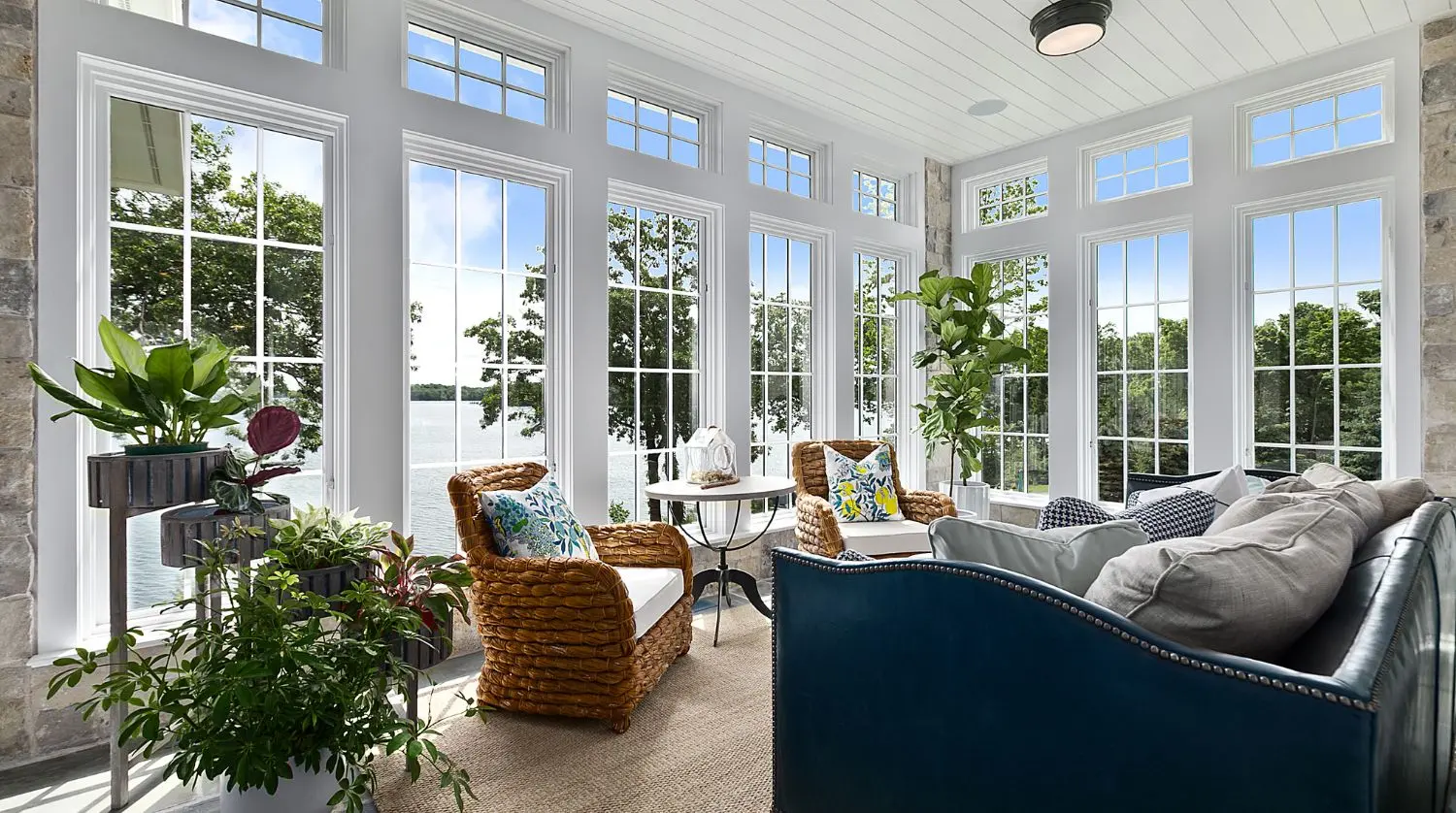
What Is Low-E Glass?
What is low-E glass? Low-E glass is window glass with a microscopically thin, nearly invisible metal or metal oxide coating that reflects heat while letting daylight through. In Santa Barbara homes, low-E glass helps keep afternoon sun heat out in summer and room warmth in on cool evenings, and it is standard on most replacement windows.
Bella View Windows & Doors has helped homeowners across the Santa Barbara South Coast choose window glass since 1982, from beach homes in Carpinteria and Goleta to view homes in Montecito and ranch houses in the Santa Ynez Valley. As a Milgard Certified dealer holding CSLB License #1121282, our Santa Barbara window installers explain glass options at almost every consultation, and low-E is the term homeowners ask about most. This guide explains what low-E glass does, how the different types compare, and how to choose a low-E package for a South Coast home. Our window and door replacement services page covers the products and glass options available.
Request a free in-home window consultation to compare low-E glass options for your home.
What Does Low-E Mean on a Window?
Low-E stands for low emissivity, which describes how little heat a surface radiates. A low-E coating reflects infrared heat instead of absorbing and re-radiating it, so less heat moves through the glass. The coating is applied at the factory to one or more glass surfaces inside a dual-pane window.
Every warm object gives off invisible infrared heat. Ordinary clear glass absorbs much of that heat and passes it along, from the warm side of the window to the cool side. A low-E coating acts like a heat mirror that reflects much of the infrared energy back toward where it came from, while visible light still passes through.
The U.S. Department of Energy describes low-E coatings as microscopically thin, virtually invisible layers of metal or metallic oxide deposited directly on the glass. From across a room, most low-E glass looks like clear glass, though some coatings give a faint tint or reflection at certain angles.
How Does Low-E Glass Work in Summer and Winter?
In summer, low-E glass reflects much of the sun’s infrared heat back outside before it reaches the room. On cool evenings and winter nights, it reflects warmth from inside the home back into the room. The result is glass that stays closer to room temperature year-round, which makes spaces near windows more comfortable.
On the South Coast, both effects come into play. A west-facing family room in Goleta can heat up on a clear September afternoon, and the same room can feel chilly near the glass on a cool January evening. Low-E glass addresses both situations by slowing heat flow in each direction.
Warmer interior glass on cool mornings also helps reduce condensation on the inside of windows. Our article on why there is condensation on the inside of windows explains how glass temperature and indoor humidity work together.
What Are the Different Types of Low-E Glass?
Low-E glass comes in coatings designed for high, moderate, or low solar heat gain, and in two manufacturing types: soft-coat and hard-coat. High-solar-gain coatings let more of the sun’s warmth in, which suits cold climates. Low-solar-gain coatings block more of it, which suits sunny rooms in warmer climates like Santa Barbara.
Ways low-E coatings differ:
- Solar gain level. The Department of Energy notes that low-E coatings are designed for high, moderate, or low solar gain, so the choice can be matched to the climate and the side of the house.
- Spectrally selective coatings. These are designed to block much of the sun’s heat while still letting in most visible daylight, which helps keep rooms bright without the heat.
- Soft-coat low-E. Applied in a vacuum chamber, soft-coat low-E generally offers higher performance but is delicate, so it is sealed inside the insulating glass unit where air and moisture cannot reach it.
- Hard-coat low-E. Fused to the glass while it is hot during manufacturing, hard-coat low-E is more durable and can be used on exposed glass surfaces, though its energy performance is generally a little lower than soft-coat.
- Multiple coating layers. Some glass uses two or three silver layers in one coating, often marketed with names like low-E² or low-E³, to block more solar heat.
Where Is the Low-E Coating on a Dual-Pane Window?
On a dual-pane window, the low-E coating is usually on one of the inner glass surfaces facing the sealed space between the panes, where it is protected from cleaning and weather. Window makers number the glass surfaces from outside to inside, so a coating on surface 2 sits on the inside face of the outer pane.
How the four surfaces of a dual-pane window are numbered:
- Surface 1 is the outside face of the outer pane, the side exposed to weather.
- Surface 2 is the inside face of the outer pane, facing the space between the panes. Solar control low-E coatings are often placed here.
- Surface 3 is the outer face of the inner pane, also facing the space between the panes.
- Surface 4 is the room-side face of the inner pane. Some manufacturers offer a durable coating here to improve insulating performance. Milgard, for example, offers a 4th Surface coating option.
The space between the panes is often filled with argon gas, which slows heat flow better than air. The low-E coating, gas fill, and spacer at the edge of the glass work together to produce the ratings on the window label.
How Do You Know If a Window Has Low-E Glass?
The simplest way to know if a new window has low-E glass is the NFRC label or the manufacturer’s product description. On existing windows, look for etched marks in a glass corner, or hold a phone flashlight near the glass. A reflection that is a different color from the others usually means a coating.
The light test works because each glass surface reflects a small image of the light. On clear glass, all the reflections look the same color. A low-E coated surface typically shows a reflection with a slightly different tint, often pink, blue, or green. Many existing windows in older South Coast homes, especially original single-pane aluminum windows, have no low-E coating at all.
Does Low-E Glass Block UV Rays?
Low-E glass blocks a large share of the sun’s ultraviolet (UV) rays, which helps slow fading of floors, furniture, and artwork. It does not stop fading completely, because visible light and heat also contribute to fading. Laminated glass and certain coatings block more UV than standard low-E glass.
Rooms with strong sun and valuable finishes, such as a living room with hardwood floors facing the ocean or a Montecito study with artwork, are where UV protection gets the most attention. Manufacturer specifications list how much UV each glass package blocks, so compare those numbers when fading is a concern.
How Does Low-E Glass Affect U-Factor and SHGC?
Low-E glass lowers a window’s U-factor, meaning less heat passes through, and depending on the coating, it can also lower the Solar Heat Gain Coefficient (SHGC), meaning less solar heat comes in. Both numbers appear on the NFRC label, which is the clearest way to compare low-E packages.
The National Fenestration Rating Council (NFRC) is the independent nonprofit that certifies window energy ratings. Its label shows:
- U-factor, which measures how quickly heat passes through the whole window. Lower numbers insulate better.
- SHGC, from 0 to 1, which measures how much of the sun’s heat comes through. Lower numbers resist solar heat.
- Visible Transmittance (VT), from 0 to 1, which measures how much daylight comes through. Higher numbers let in more light.
Our article on what SHGC is on a window explains solar heat gain in more detail and how to choose a value for each side of a house.
Does Low-E Glass Make Rooms Darker?
Some low-E glass reduces visible light slightly, especially coatings designed to block the most solar heat. Spectrally selective low-E coatings are designed to block heat while letting most daylight through. Compare the Visible Transmittance number on the NFRC label to see how bright each glass option will look.
Many South Coast homeowners want to keep the view of the mountains, the ocean, or the garden looking natural. A glass package with a balance of low SHGC and good visible light usually works well in living areas, while a stronger solar control coating may make sense for a west-facing room that overheats.
Does California Require Low-E Glass?
California’s Energy Code does not name low-E glass specifically, but replacement windows must meet maximum U-factor values, and SHGC limits in some climate zones, that are hard to reach without low-E coatings. In practice, most dual-pane replacement windows sold in California include low-E glass as standard.
- California Energy Code, Title 24 Part 6. The 2025 Building Energy Efficiency Standards apply to permit applications filed on or after January 1, 2026. For single-family homes, replacement windows generally must meet a maximum U-factor of 0.27, with SHGC limits that depend on the climate zone and limited exceptions.
- Climate zones. Santa Barbara County spans more than one California building climate zone, so coastal and inland addresses can have different requirements. The California Energy Commission’s climate zone tool confirms the zone for any address.
- Permits. In the City of Santa Barbara, all window replacements require a building permit, and the NFRC label documents energy compliance. The City of Goleta, the City of Carpinteria, and the County of Santa Barbara each run their own permit process.
- Wildfire areas. In mapped Fire Hazard Severity Zones, California Building Code Chapter 7A most commonly calls for a multi-pane insulating glass unit with at least one tempered pane. Low-E coatings and tempered glass are commonly combined in the same window.
Milgard describes its SunCoat Low-E glass as standard on its energy-efficient windows, with specialty glass options available, and other manufacturers Bella View carries offer their own low-E packages.
Can You Add Low-E to Existing Windows?
You can add a low-E window film to existing glass, but it is not the same as factory low-E inside a sealed dual-pane unit. Films can reduce solar heat and glare on existing windows. However, applied films can affect manufacturer warranty coverage on insulating glass, so check the warranty first.
Milgard’s Full Lifetime Warranty, for example, excludes damage or defects related to applied tints or films. When existing windows are single-pane, have failed seals, or are near the end of their life, replacement windows with factory low-E glass are usually the more lasting fix. Our article on when you should replace your windows covers the signs that point toward replacement.
Which Low-E Glass Is Right for Santa Barbara Homes?
The right low-E glass for a Santa Barbara home depends on which way each window faces, how much shade it gets, and how bright you want the room. Low-solar-gain coatings usually make sense for west- and south-facing windows without deep overhangs, while shaded walls can favor coatings that let in more daylight.
Common South Coast choices:
- West-facing rooms in Goleta, Santa Barbara, and the Santa Ynez Valley often get a low-solar-gain coating to control late-afternoon heat.
- Ocean and mountain view walls in Montecito and the foothills often get a spectrally selective coating that keeps views bright and natural.
- North-facing and shaded windows can prioritize daylight and U-factor over solar heat control.
- Patio and multi-slide doors add a lot of glass in one place. Our article on what multi-slide patio doors are covers glass considerations for wide openings.
- Beach-adjacent homes benefit from considering glass and frame together. Our guide to the best windows for coastal homes in Santa Barbara covers frame materials and hardware near the ocean.
How Do Our Santa Barbara Window Installers Help You Choose Low-E Glass?
Our Santa Barbara window installers note which way each window faces and how the room is used, then show low-E glass options with their NFRC ratings so you can compare heat control and daylight side by side. The project then moves through permits, ordering, installation, testing, and a walkthrough.
- Free in-home consultation and measurement. Every opening is measured with a dual-check process, sun exposure is noted for each wall, and pricing is provided on the spot.
- Product and glass selection. Options include vinyl, fiberglass, aluminum, and wood clad windows from manufacturers such as Milgard, Anlin, and Windsor, with low-E packages matched to code and to each room’s sun.
- Permits and reviews. Permits are pulled with the right city or county, energy compliance is documented, and any HOA architectural committee or historic review is planned before ordering.
- Ordering and lead time. Materials typically arrive in four to six weeks.
- Installation day. In-house installers re-measure each opening on install day, then install, flash, and seal each window. Most installs are finished in one day.
- Testing, cleanup, and walkthrough. Every unit is tested, NFRC labels stay in place for the building inspector, the site is cleaned, and the homeowner gets a walkthrough of glass care.
- Warranty follow-up. If a question comes up later, our Goleta and Santa Barbara window replacement crew helps connect the homeowner with the manufacturer’s warranty process.
Why Choose Bella View Windows & Doors for Your Low-E Window Project?
Bella View Windows & Doors has served Santa Barbara, Goleta, Montecito, Carpinteria, and Santa Ynez since 1982. As a Milgard Certified dealer, Bella View holds CSLB License #1121282, uses in-house installers, and measures and flashes every opening as if it will face salt air and winter storms for decades.
The goal on every South Coast project is the right window for the house and the budget, not the most expensive one. Sometimes that means a standard low-E package throughout, and sometimes a stronger solar control coating on the west side of the house only. Our Santa Barbara replacement window team also offers patio doors, multi-slide and bifold doors, retrofit and full-frame installation, and materials-only sales.
Contact Our Santa Barbara Window Installers
If you are comparing glass options or wondering whether your current windows have low-E glass, a Santa Barbara window installer from Bella View Windows & Doors can take a look with you. Schedule your free in-home window consultation, or visit the showroom at 3010 State Street, Santa Barbara, CA 93111, Monday through Friday from 8am to 4:30pm. CSLB License #1121282.
This article is for general information only. Energy code requirements, climate zone assignments, permit rules, rebates, and pricing change over time and vary by property. Confirm current requirements with your city or county before starting a project. NFRC ratings and manufacturer specifications describe product performance under standard test conditions, and manufacturer warranty terms govern all warranty coverage.